Small Business Growth Strategies: 10 Proven Ways to Grow Your Business

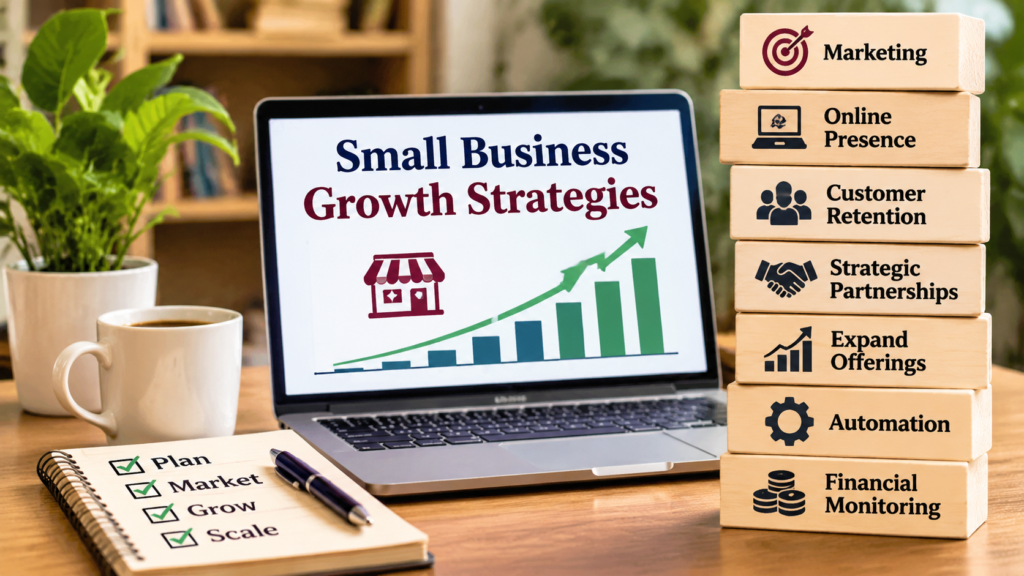
Small Business Growth Strategies That Work
Strategies for growing small businesses help owners increase their customer base, boost income, optimize business processes and strengthen their business. Usually, the strategic growth of a small business hinges on the plans, decisions and actions of the business owner. Good strategies empower the owner to take control and make the decisions that translate to the businesses opportunities and sustainable growth.
Selecting the right business growth strategies helps business owners make better decisions concerning customer retention, financial planning and marketing. The owner should take a practical approach to improvements based on long term business objectives.
Create a Clear Business Growth Plan
A successful business needs a clear direction before investing time and money in expansion. Start by reviewing your current sales, customer base, operating costs, and available resources. Identify the areas that need improvement and set realistic targets for the next six to twelve months. These goals might include increasing monthly revenue, reaching a new audience, launching additional services, or improving customer retention. Break each objective into smaller tasks, assign deadlines, and review your progress regularly. A practical growth plan helps business owners make informed decisions instead of relying on guesswork.
For additional business guidance, explore the resources available from the U.S. Small Business Administration.
Understand Your Target Market
Understanding your target market helps you identify the customers most likely to purchase your products or services. Research their needs, preferences, purchasing habits, and common challenges. Use customer feedback, online reviews, competitor websites, and market research to discover opportunities. Pay attention to what customers appreciate about your business and where competitors are falling short. This information can help you improve your offers, develop more relevant marketing messages, and reach potential buyers through the channels they already use. A clear understanding of your audience makes business growth more focused and cost-effective.
Build a Strong Online Presence
A professional online presence makes it easier for potential customers to discover and trust your business. Start with a well-organized website that clearly explains your products, services, pricing, and contact information. Optimize important pages for relevant search terms and publish helpful content that answers customer questions. Maintain active business profiles on social media platforms where your audience spends time. You can also use email marketing to stay connected with existing customers and share useful updates. Consistent branding, useful information, and a smooth website experience can help turn visitors into potential buyers.
Invest in Effective Marketing Strategies
Marketing helps small businesses reach potential customers, communicate their value, and generate consistent sales. Instead of spending money on every available advertising channel, focus on strategies that match your audience and business objectives.
Search engine optimization can help attract visitors who are actively searching for relevant products or services. Research useful keywords, optimize website pages, publish informative blog posts, and improve your website’s overall user experience. Social media marketing can also help businesses build brand awareness and communicate directly with potential customers.
Email marketing is another useful approach for maintaining relationships with existing customers. Share product updates, helpful resources, special offers, and relevant company news. Monitor the performance of each campaign to understand which channels generate the most valuable leads.
The best small business growth strategies combine consistent marketing with measurable results. Track website traffic, inquiries, conversion rates, and advertising expenses to identify opportunities for improvement.
Using effective small business growth strategies can also help companies reach new audiences, improve brand recognition, and generate consistent leads.
Improve Customer Experience and Retention
Attracting new customers is important, but retaining existing customers can create more predictable revenue. People are more likely to purchase again when they receive reliable service, helpful communication, and products that meet their expectations.
Start by making the purchasing process simple. Provide clear product descriptions, transparent pricing, convenient payment options, and accurate delivery information. Respond to customer questions promptly and resolve complaints professionally.
Ask customers for feedback after important purchases. Their suggestions can reveal problems with your products, services, or ordering process. Use this information to make practical improvements.
You can also introduce customer loyalty programs, personalized recommendations, and exclusive offers for returning buyers. These approaches encourage repeat purchases while helping customers feel valued.
A positive customer experience can lead to referrals and recommendations, allowing your business to reach new audiences without relying entirely on paid advertising.
Develop Strategic Partnerships and Business Networks
Building relationships with other businesses can create opportunities that are difficult to achieve independently. Strategic partnerships allow companies to share resources, reach new audiences, and introduce their products or services to potential customers.
Look for businesses that serve a similar audience without directly competing with your company. For example, a web design agency might partner with a digital marketing consultant, while a local fitness studio could collaborate with a nutrition professional.
You can also participate in industry events, professional communities, business associations, and networking groups. These connections can introduce you to suppliers, potential clients, experienced entrepreneurs, and future business partners.
Before entering a partnership, establish clear expectations. Discuss responsibilities, costs, marketing activities, and the results both parties want to achieve.
Strong professional relationships can support sustainable expansion and create valuable opportunities for long-term business development.
Expand Your Products, Services, and Market Reach
Expanding your business can increase revenue, attract different customer groups, and reduce dependence on a single product or service. However, expansion should be based on actual customer demand rather than assumptions.
Start by reviewing your sales records, customer feedback, and market research. Identify products or services that customers frequently request. Consider whether you can introduce complementary offerings that solve additional problems for your existing audience.
You might also explore new geographic markets or online sales channels. An established local retailer, for example, could introduce an ecommerce website to reach customers beyond its immediate area.
Test new opportunities on a manageable scale before making major investments. Evaluate expected expenses, operational requirements, customer demand, and potential profitability.
Successful expansion requires careful planning. Growing too quickly without sufficient resources can create financial pressure and reduce service quality. Choose opportunities that match your company’s capabilities and long-term objectives.
Use Automation to Improve Business Operations
As a company grows, repetitive administrative tasks can consume more time and resources. Automation helps small business owners simplify routine activities and focus on responsibilities that contribute directly to growth.
Start by identifying tasks that follow predictable processes. Examples include appointment reminders, invoice notifications, email follow-ups, customer inquiry management, and recurring reports.
Choose software that addresses specific operational needs. Accounting platforms can organize financial records, customer relationship management systems can manage customer information, and project management tools can help employees coordinate assignments.
Automation should support your employees rather than make business operations unnecessarily complicated. Review each tool’s cost, usability, security, and integration capabilities before adopting it.
The goal is to create efficient workflows that reduce manual work, minimize errors, and improve consistency as your business handles more customers.
Businesses can also explore how artificial intelligence is changing the way companies operate and manage everyday tasks.
Monitor Financial Performance and Growth Metrics
A business needs accurate financial information to understand whether its growth efforts are producing meaningful results. Increasing sales does not automatically mean increasing profitability.
Review your revenue, operating expenses, gross profit, net profit, and cash flow regularly. Compare current results with previous months to identify positive trends and potential problems.
You should also monitor customer acquisition costs, average order value, repeat purchase rates, and marketing conversions. These measurements can show whether your marketing investments are attracting valuable customers.
For example, if website traffic increases but sales remain unchanged, investigate your landing pages, product information, pricing, and checkout experience. If operating expenses rise faster than revenue, review your spending and identify areas where efficiency can improve.
A simple monthly performance report can make these decisions easier. Use reliable data to adjust your strategy and prioritize activities that contribute to sustainable business growth.
Conclusion
Building a successful company requires more than increasing sales or attracting new customers. Effective small business growth strategies involve understanding your market, creating a clear business plan, improving customer relationships, investing in marketing, and managing financial resources carefully.
Start with the areas that offer the greatest opportunities for improvement. Strengthen your online presence, develop reliable operational systems, explore useful partnerships, and monitor your performance regularly.
You do not need to implement every strategy immediately. Focus on practical improvements that match your budget, available resources, and customer needs. With consistent planning and informed decisions, your business can become more competitive, profitable, and prepared for long-term growth.
Frequently Asked Questions
What are some effective small business growth strategies?
Effective small business growth strategies include improving SEO, developing a consistent marketing plan, retaining existing customers, expanding product offerings, building strategic partnerships, and monitoring financial performance.
How can I grow my small business with a limited budget?
Start by improving your website, using organic SEO, building customer referrals, publishing helpful content, and maintaining relationships with existing customers. Focus on affordable activities that produce measurable results before investing in expensive advertising campaigns.
What are the seven stages of business growth?
Business growth is commonly described through stages such as existence, survival, success, take-off, and resource maturity. Some business frameworks divide these stages further into seven phases. The exact model varies, but businesses generally move from establishing operations to achieving stability, expansion, and maturity.
How can digital marketing help a small business grow?
Digital marketing helps businesses reach targeted audiences through search engines, social media, email campaigns, and online advertising. It can increase brand awareness, generate qualified leads, improve customer communication, and support measurable sales growth.
How do I measure the success of my business growth strategy?
Measure results using revenue, profit margins, cash flow, customer retention, conversion rates, website traffic, and customer acquisition costs. Compare these metrics regularly to determine which activities contribute most effectively to your business objectives.